Looking into the Earth - Pucón & Villarrica
Our main reason for heading to Pucón was climbing the famous Villarrica volcano. This volcano is one of fewer than a dozen places on Earth where it’s possible to look down into the crater and see a lava lake.
Making our way north from Chiloé, we made a brief stop in Puerto Montt. We had to pick up some much-needed supplies. Most importantly, Britt needed a new pair of sunglasses. She lost hers trying to cross a river while we were descending from Cerro Mojón Rojo. Until now she had managed without her own glasses, but with our plan of climbing Villarrica, she needed a new pair. With its 280,000 inhabitants, Puerto Montt is a city with everything you’ll need, including a large modern shopping mall with all the shops that you know from home. Walking into a Decathlon on the other side of the world is such a strange experience. The products are the same, the price is about the same, the signs are the same. The only discernible difference is the language printed on the signs. After a quick look around, we had found the sunglasses and swimming attire that we were looking for.
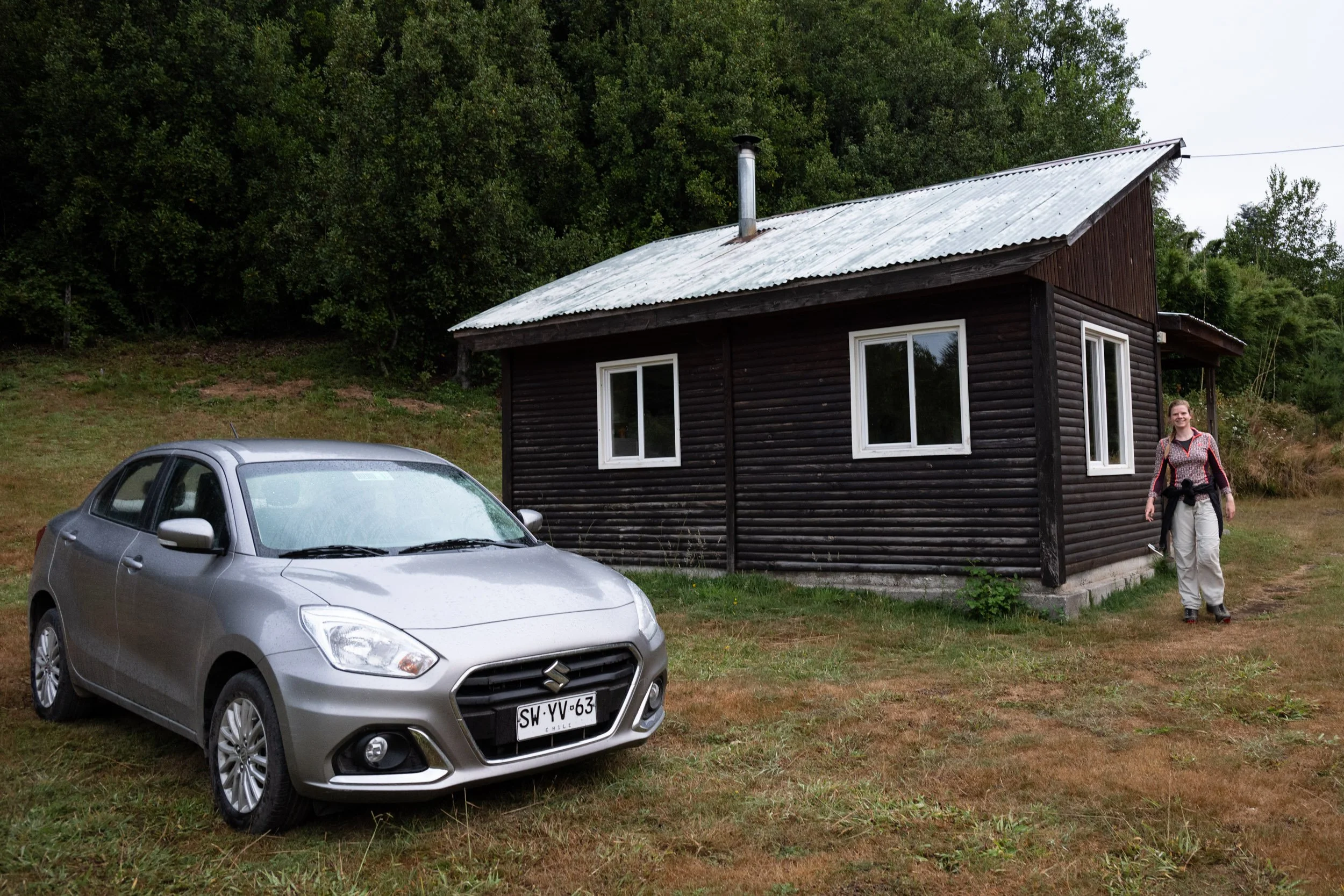
After a successful shopping adventure, we headed about 6 hours further north. We had rented a cabin about half an hour east of Pucón. A small place in the middle of the forest. In total, some 5-6 houses. 4 of them owned by an Englishman who moved here 20 years ago to pursue his passion for kayaking and other river sports.
Our plan was to spend a few days on the northern side of the Villarrica volcano before driving the 4-5 hours around it to the southern side of the volcano. Our goal was to climb the volcano from the north face. The volcano itself poses no technical difficulty. It’s a stratovolcano which gives it its iconic volcano-look. An almost perfectly symmetrical cone with slopes at a gentle gradient.
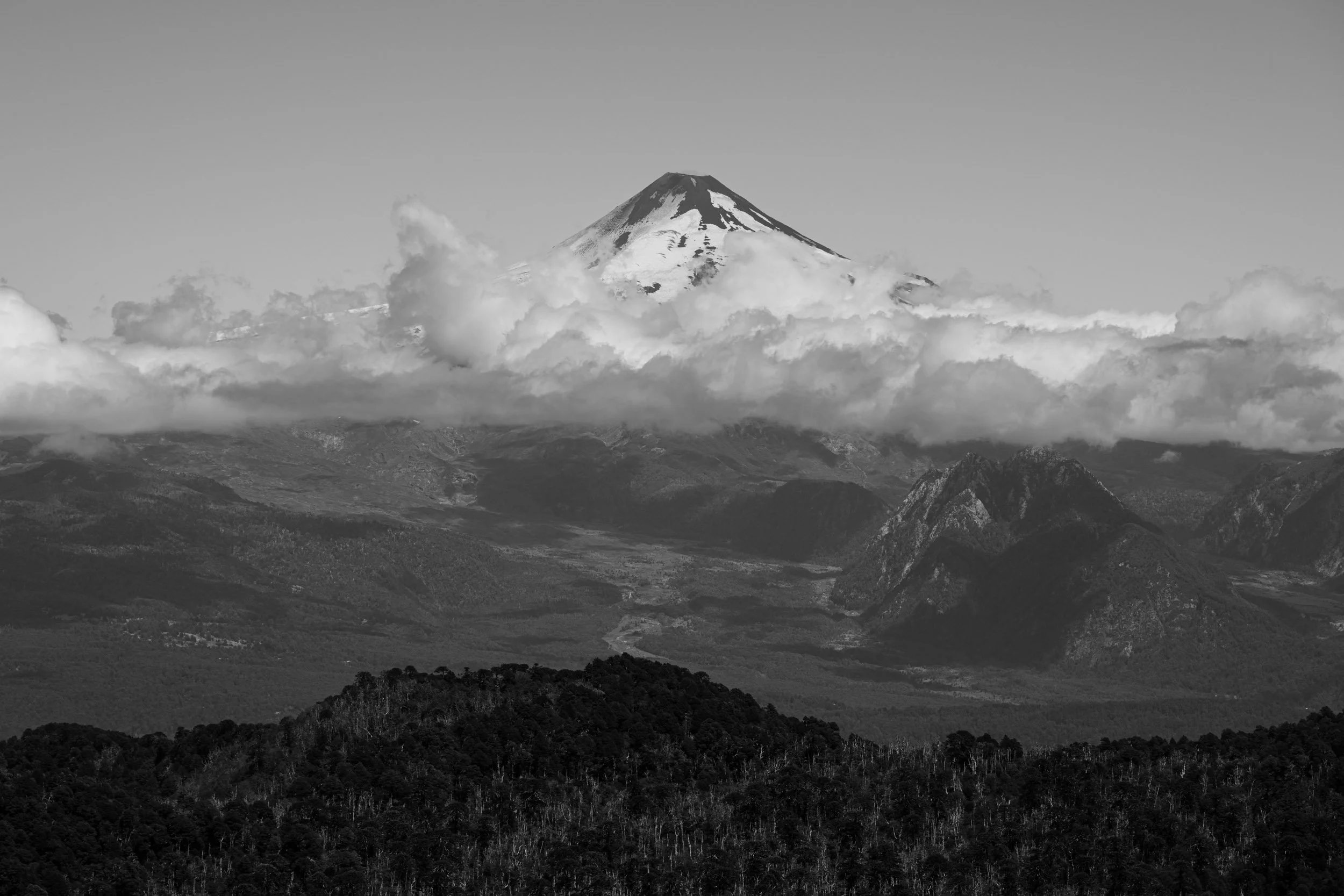
The Villarrica volcano photographed from Santuario El Cañi.
Santuario El Cañi
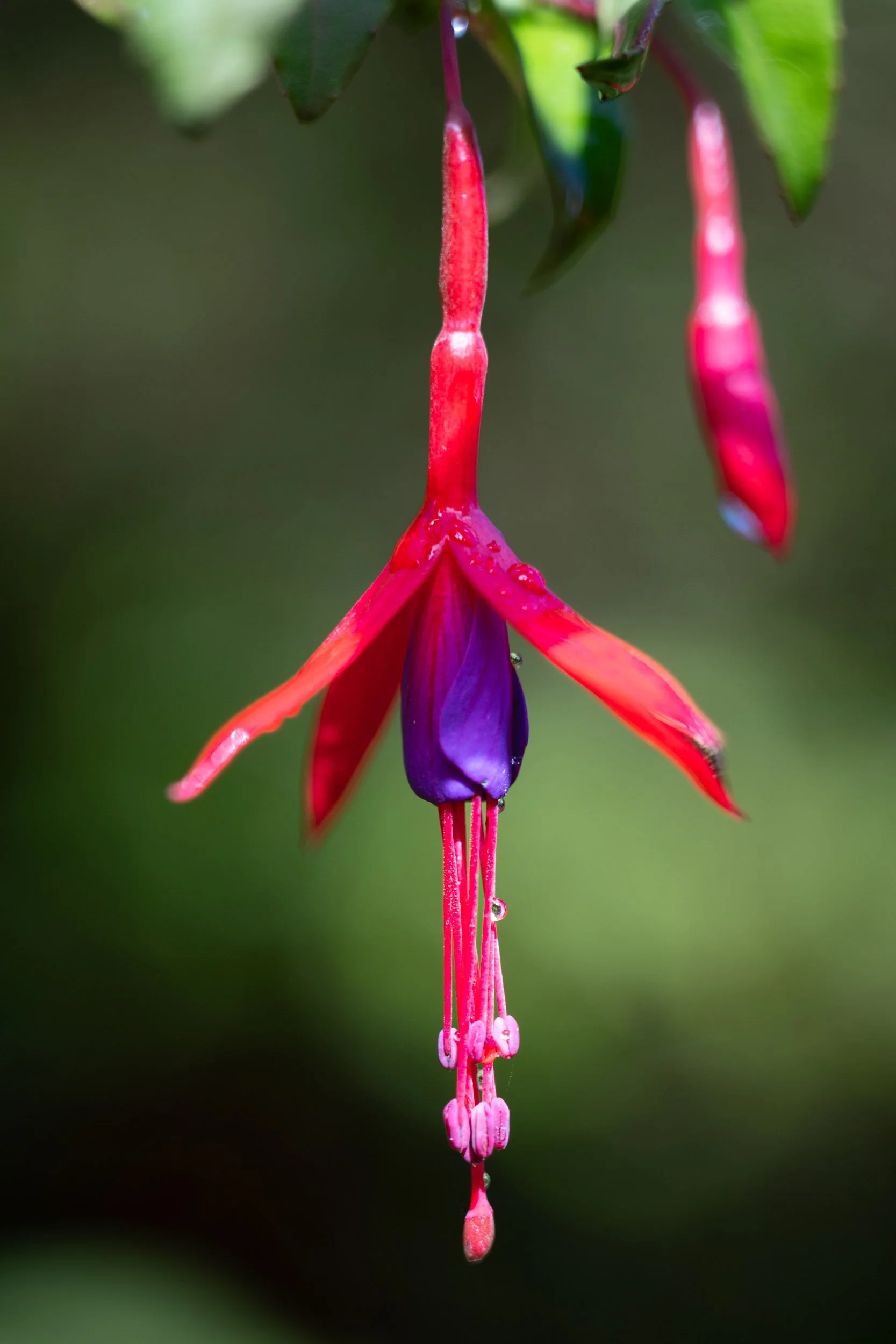
After a humid night, delicate water droplets cling to the petals of a beautiful Fuchsia magellanica, also known as the Chilco.
For our ascent of Villarrica, we needed near-perfect weather. Preferably sun, no rain and light wind from the north. The latter is to keep the constant cloud of gasses coming out of the volcano floating away from you as you climb up the north slopes. The sun and no rain are mainly because it’s way less fun being on the top without a view. The weather forecast for the coming days was looking grey. Light rain was expected as well. We decided to postpone our summit attempt for a few days and instead spend some time relaxing in our cabin and doing some easier day hikes.
At the entrance, we were handed a small folder with a map of the park and a beautifully drawn overview of the park’s many animals. As the park ranger showed us the overview, he said with a less than optimistic voice: “These are the animals you can be lucky and see in the park”. As always, we set off full of optimism. We were going to make the most of it. In all honesty, we knew that seeing wildlife along a busy trail in the middle of the day was going to be a challenge and that it would require a healthy portion of luck to even get a glimpse of anything significant. Just inside the park boundary are a handful of farms run by members of the indigenous community. Each consisting of a couple of small tin houses, a horse, a few cows, a drove of pigs, a couple dozen roaming chickens and a persistently barking dog or two. Passing the dogs requires a firm stride. Each dog is doing its best to protect its turf, and stopping or second-guessing your path only makes matters worse. It’s a classic western standoff. You blink, you lose.
As we passed higher into the hills, the landscape started changing. The trees got taller and the undergrowth denser. The last of the morning fog was still hanging in the air, blocking the view from the viewpoints marked along the trail. Hoping to get a view, we headed down a small side trail which according to the map should lead to a beautiful viewpoint. After a few steps down the path, we ran into a young Dutch woman. She looked defeated. “No reason to head down that way. You can’t see anything anyway” she said with clear disappointment in her voice. We followed her advice and skipped this side-quest. Back on the main trail, we continued our way up the hill, passing an old, overgrown campsite and a wooden shelter large enough to sleep some 20 people. In the middle of the shelter was an open fireplace. The fire wasn’t burning, but the air in the shelter was still thick and uncomfortable to breathe. After a quick look around the shelter, we continued our journey. Still a long way up. Leaving the shelter behind, the path narrowed into a single-track just wide enough for one person.
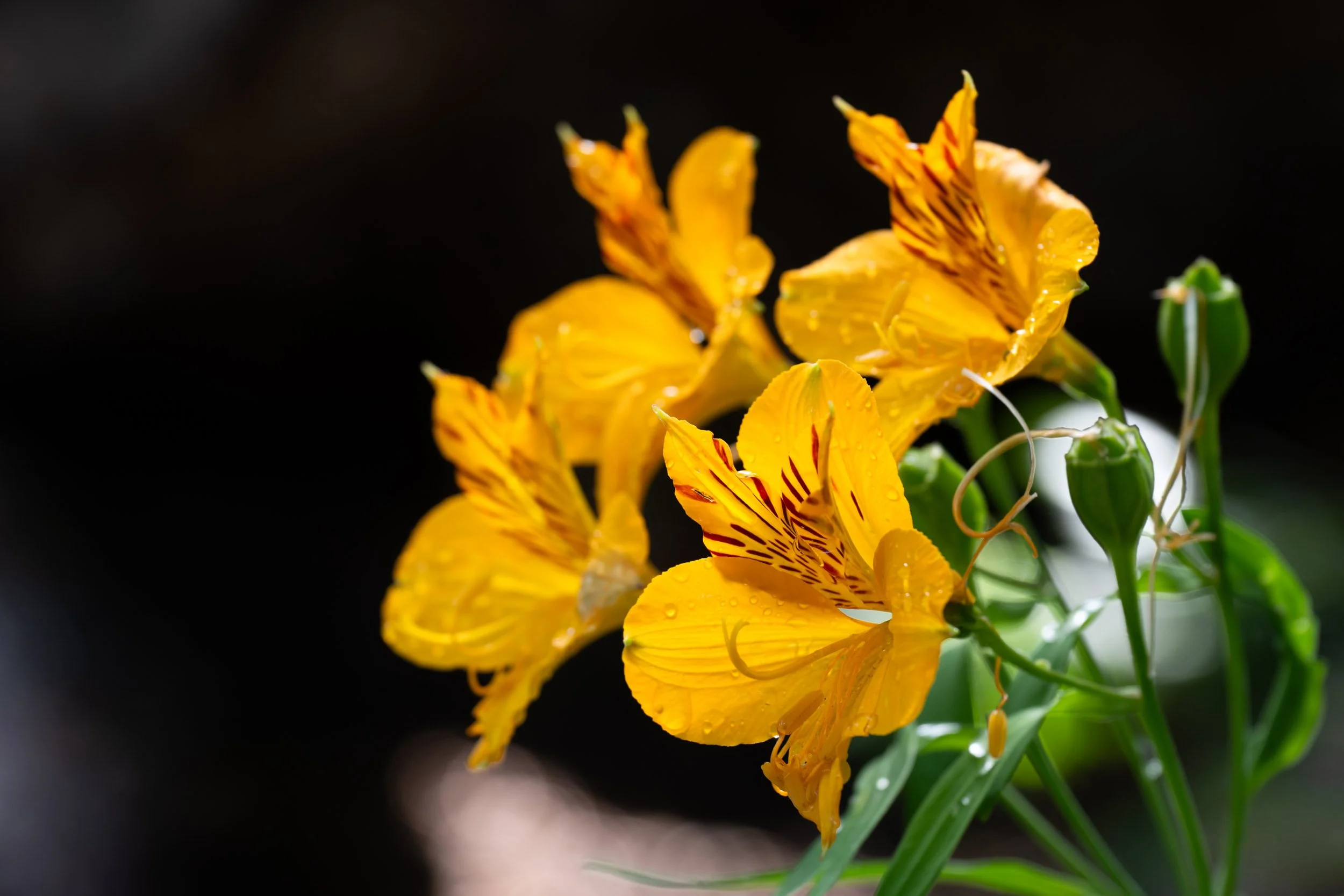
The strikingly yellow Alstroemeria aurea, also known as the Peruvian Lily or the Lily of the Incas.
Apart from the animals that roam the park, the park is famous for its many Monkey Puzzle Trees (Araucaria Araucana). A truly distinctive-looking tree. The best way to describe it is that the branches are made up of the leaves which grow in a pattern mostly resembling a pinecone. You can find this tree cultivated in other parts of the world but it’s native to this region. Here the tree only grows at an altitude between 1000 metres and 1700 metres. To underscore the national significance of this magnificent tree, the Chilean government made it the official tree of Chile.
As we made our way up the tree-covered hillside, we passed through a section of particularly dense undergrowth. Fern-like plants almost taller than us. The air was humid, filled with the distinct sweet smell of decaying organic material. A large tree had fallen over and had created a small clearing. Right there, sitting on a larger branch splitting off from the trunk of the tree, was a small greyish owl with the most striking yellow eyes. The kind of yellow that can pierce through even the thickest undergrowth. Unsure how long this moment would last, I started shooting away. Lots of pictures. Loosely referencing Paul Nicklen, arguably the most influential wildlife photographer of his generation, first, make sure you get a picture to document what you’ve just seen. Once that’s done, you can start being creative and work to create visually powerful images. I always try to keep that in mind. After a minute, a second owl landed on the ground next to the fallen tree. With their small size and their fearless attitude towards life, we were certain that they were juvenile owls. Sitting there, seemingly unbothered by our presence, it seemed like they were waiting for mom and dad to return with lunch. After having enjoyed watching the tiny owls jump from branch to branch, we decided it was time to give them some space. Confident that I’d gotten a decent photo, we set off.
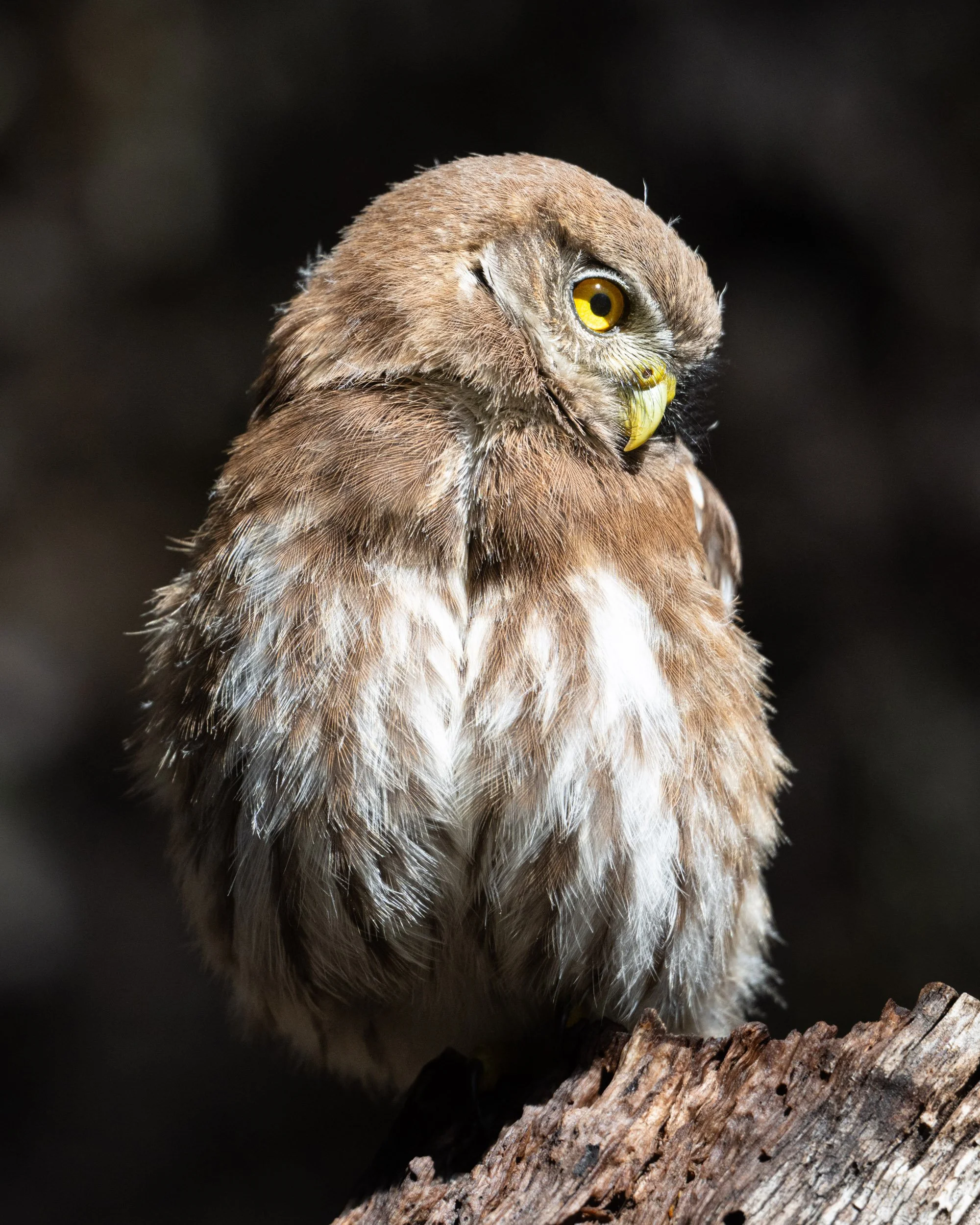
The incredible Austral pygmy owl.
We made it to the shore of the small lake which marks the start of the final stretch to the top. From here, there is a short but rather steep section to the top. An ascent of some 150 metres. It was well past midday; the blazing sun had turned the foggy morning into a clear day. From the viewpoint, there was an almost uninterrupted view of the surroundings. Only the occasional tree was blocking parts of the view. In the far distance stood Villarrica together with its neighbouring volcano, dominating the view. The top of the viewpoint comprises of a pile of large stones. We found two stones flat enough for a lunch spot. After a moment, a small hairy friend showed up between the rocks. From under the stones, a mouse poked its nose out. Clearly used to humans and conditioned to the sound of lunch. The little guy made his move. Positioning himself strategically under our rocks, ready to steal anything falling to the ground. Throughout our lunch, the mouse worked tirelessly to catch even the tiniest breadcrumb. For his dedication to the cause, we shared our last tiny piece of bread with him. After having enjoyed our lunch, it was time to retrace our tracks. Going down we followed the same path as on our way up, stopping next to the lake, enjoying the water birds playing in the shallows. As we passed by the wooden shelter, the fire was lit. Curious, we poked our heads through the door to see who or what was going on. Three hikers had set up camp. They were preparing dinner over the open fire. The shelter was filled with thick, heavy smoke causing our eyes to start running. Breathing was quickly becoming a challenge. We left the shelter in a hurry, talking about how our forefathers would have cooked like this and the many people for whom cooking like this is still an everyday event. Just outside the shelter, there is a big green bush covered in hundreds of small red bell-shaped flowers. It’s a Chilean firebush. The bush was buzzing with insects searching for pollen. Among the insects, a small greenish bird was flying around sticking its distinctly long beak deep into the flowers. A Green-backed Firecrown. A small hummingbird weighing just 5 grams. Rushing from flower to flower eating as much nectar as possible before retreating to safety in a neighbouring tree. After a few minutes of silence, the Green-backed Firecrown leapt from its resting place to once again swoosh from flower to flower. Moving between the flowers with incredible speed and precision, only to hang completely still midair eating out of the flowers. A challenging spectacle to photograph. Without solid preparations and a bag full of good luck, it’s an almost impossible task to get a truly great photo.
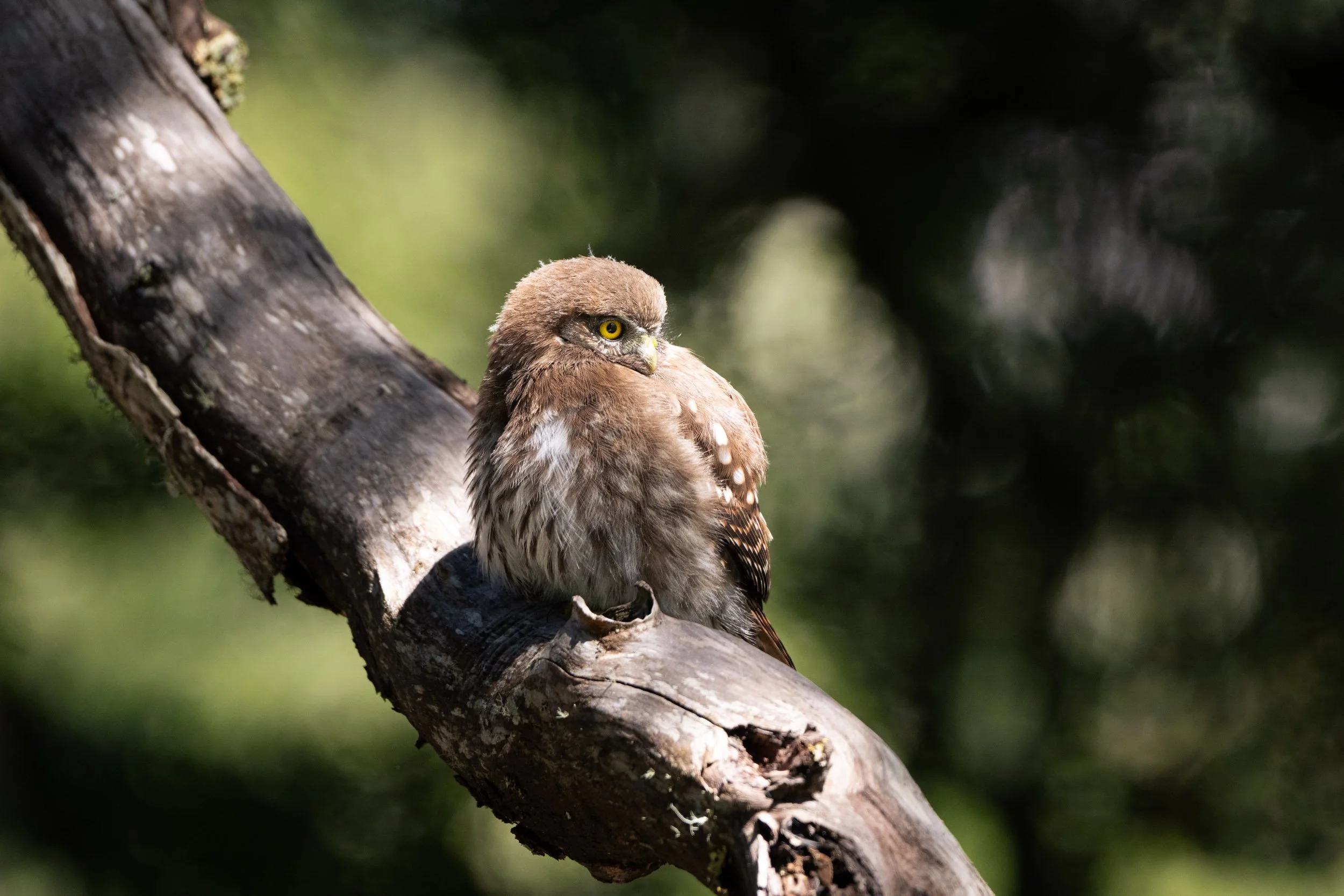
Austral pygmy owl
Back at the park entrance, we caught up with the ranger who we had spoken with earlier. We told him about our day and showed a few photos of the owl we had seen, hoping to get their help identifying the exact species. We knew of two distinct species of owls living in the area. He took a quick look at the back of my camera. With disbelief in his eyes, he quickly went back inside to get a hold of his boss. They returned with a following of rangers behind them, all keen on seeing the photo of the owl. Clearly not an everyday event. It turned out to be an Austral pygmy owl. It always strikes me as funny how we can experience something, without realising the special nature of that situation, and in other instances how we can see something thinking that this must be unique, only to realise that it’s an everyday occurrence. At the parking lot, we ran into the young Dutch woman again. She was rushing to catch her bus back to Pucón. The last bus of the day apparently. We offered her a ride back into town. Seemed only appropriate as we so often rely on other people taking us along for a ride.
The Villarrica volcano
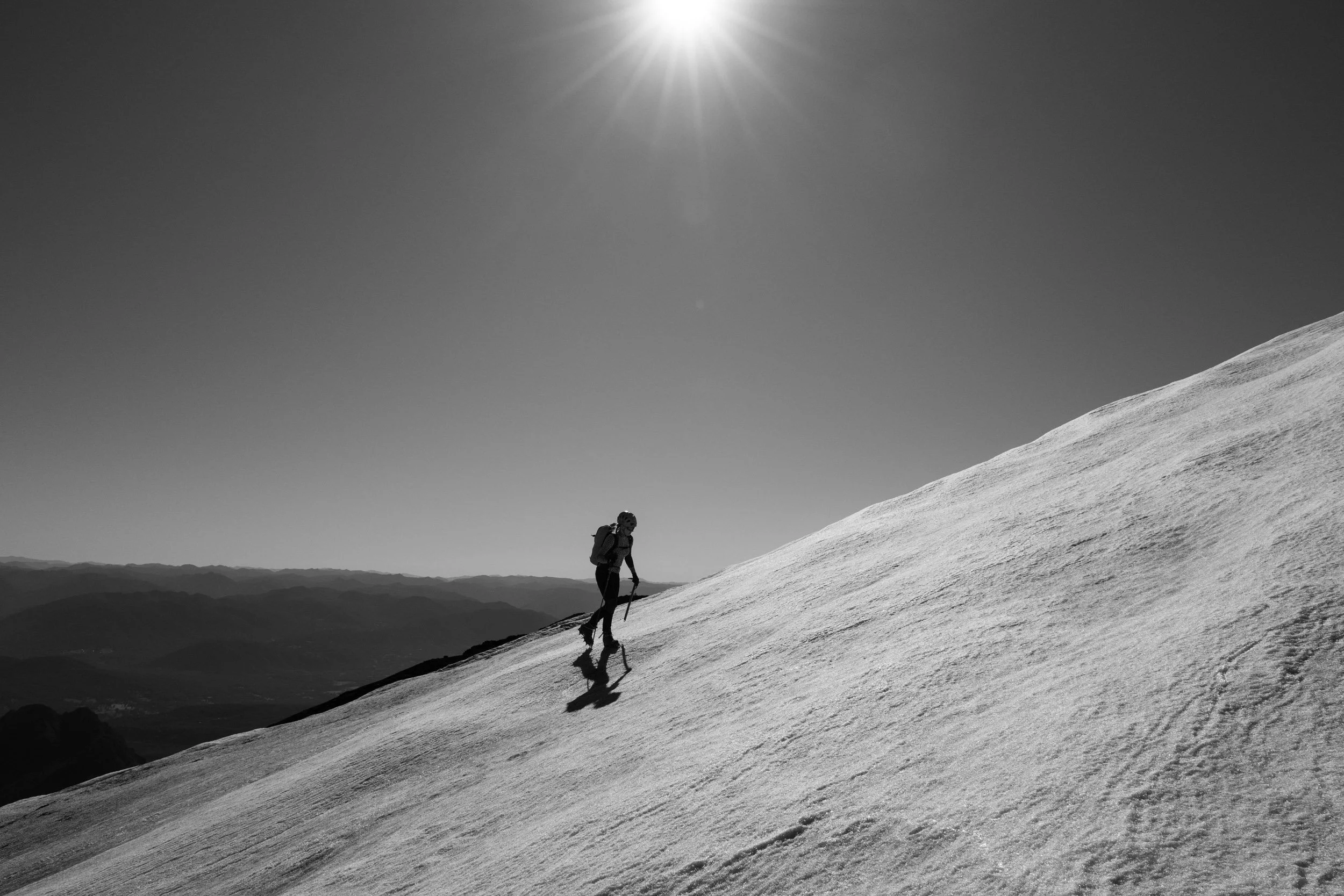
After days if waiting, it was time.
Time for adventure! If you want to climb the volcano unguided, it requires a special permit. It’s not difficult to obtain the permit if you fulfil the necessary requirements. You need to prove that you’re an experienced mountaineer and that you are in possession of the equipment required to safely complete the climb. Proving that you’re an experienced mountaineer requires you to show proof of your membership of a recognised alpine association. Not that this membership per se says much about your skill level as a climber, but anyway. I digress. The required equipment is quite standard with one exception. A gas mask. Being an active volcano, the crater continuously emits a mixture of toxic gasses. The most concerning of these is sulphur dioxide. Not highly toxic, but serious enough that it makes sense to take precautions. The gas itself is colourless, but the sulphuric smell is very pungent. You’re in no doubt if you’re within range of the gas. As gas masks aren’t normally on our packing list, we needed to get our hands on some. After a bit of asking around in Pucón, we found a tour agency that was willing to rent us two masks. You must give the owner some points for trying very hard to sell us a tour instead of letting us just rent the gas masks. Climbing Villarrica is big business in this town. How big, we were still to see.
On the morning of the climb, we drove to the ranger station where you must register if you’re climbing unguided. The process is straightforward and takes about 10 minutes. We signed a liability waiver and showed the rangers that we were in possession of the required climbing gear and the necessary gas masks. There’s nothing quite like signing a liability waiver in Spanish at 6 in the morning. You know that it’s going to be a good day.
From the ranger station, we headed up to the ski centre some ten minutes of driving inside the park. In the winter months, the northern slope of the volcano is used for skiing and snowboarding. To support the skiers, a network of ski lifts has been installed. In summer months, some of these are open for tourists and climbers. The lifts let you skip the less interesting lower third of the mountain. As beautiful as a skiing area can be in winter, just as ugly it can be in summer. Half green, half grey. Deeply uninspiring. Adding to the dystopian feel of a ski resort in summer, the old ski lifts aren’t removed when new ones are installed. It seems they’re just left here to rust away.

The busy path at the foot of the Villarica volcano.
Because of our stop at the ranger station, we were some of the last people to start the climb this morning. We ended up in the back of the line for the ski lift. We didn’t get an exact head count, but my best guess is that there were somewhere between 150 and 200 people getting ready for this morning’s ascent. Local regulation requires one guide per four climbers. Needless to say, there were a lot of guides on the mountain that morning. Each agency with its own colour-coordinated outfit worn by its clients. I guess, it’s easier to keep track of your clients if they’re all wearing the same. Not the ones with green jackets and white helmets, but the ones with red jackets and blue helmets. As an outside observer, it looks hilarious, but in all honesty, it’s a rather smart system. Losing a client is of course not an option. And certainly not on a mountain like this.
The crisp morning air was full of excitement. It was clear that most people had no or little mountaineering experience. People looked in great awe at the volcano while energetically talking about the adventure ahead. It is not that Britt and I weren’t excited for the day ahead, but we have seen enough mountains to know what is waiting for us. The weather forecast was perfect; the wind came from the right direction and the climb itself contains no technical difficulty. It would most likely be a long and physically hard day. Nothing we haven’t done before. In our brightly coloured but non-coordinated outfits, Britt and I were standing out from the crowd. As two rebellious mismatched sheep in the middle of this enormous, uniformed herd.
After having waited half an hour for a seat on the ski lift, we were finally making our way up the mountain. From the end of the ski lift, the route quickly turns into a narrow hiking path. The first part of the route makes its way up the mountain through a series of zig-zags. We quickly started overtaking the guided groups. Not to brag, but they weren’t setting any speed records. We weren’t either, but this was too slow even for us. Passing in this section wasn’t easy. The trail cuts its way through the incredibly sharp and irregular volcanic rock. Deviating even half a metre from the path can be a challenge. In many places, the ground is so uneven that you can’t put down your boots in a controlled manner. Stumbling here and breaking the fall with your hands is a certain way to get a deep, ugly cut in your fingers. Not advisable.
As on any other mountain, there are two types of guides. The friendly ones who smile, say hey and ask their clients to step aside so that you can pass. The second type totally ignores your very existence with a kind of resentment so thick that you could cut it into slices. After having fought our way through the long line of people, we stood under the first large snowfield. In reality, it’s actually more a series of snowfields. This time of year, a lot of snow has already melted away, but it was clear that it had been once solid piece of snow just a few weeks ago. The snowfields cover the middle section of the climb. Because of the uniform shape of the mountain, you can basically choose your own path up from here. A few different tracks are more frequently used; my guess is that the guides spread out over the mountain to avoid the crowd getting too clumped together. For us, it gave a bit of freedom to choose a shorter and more direct route.
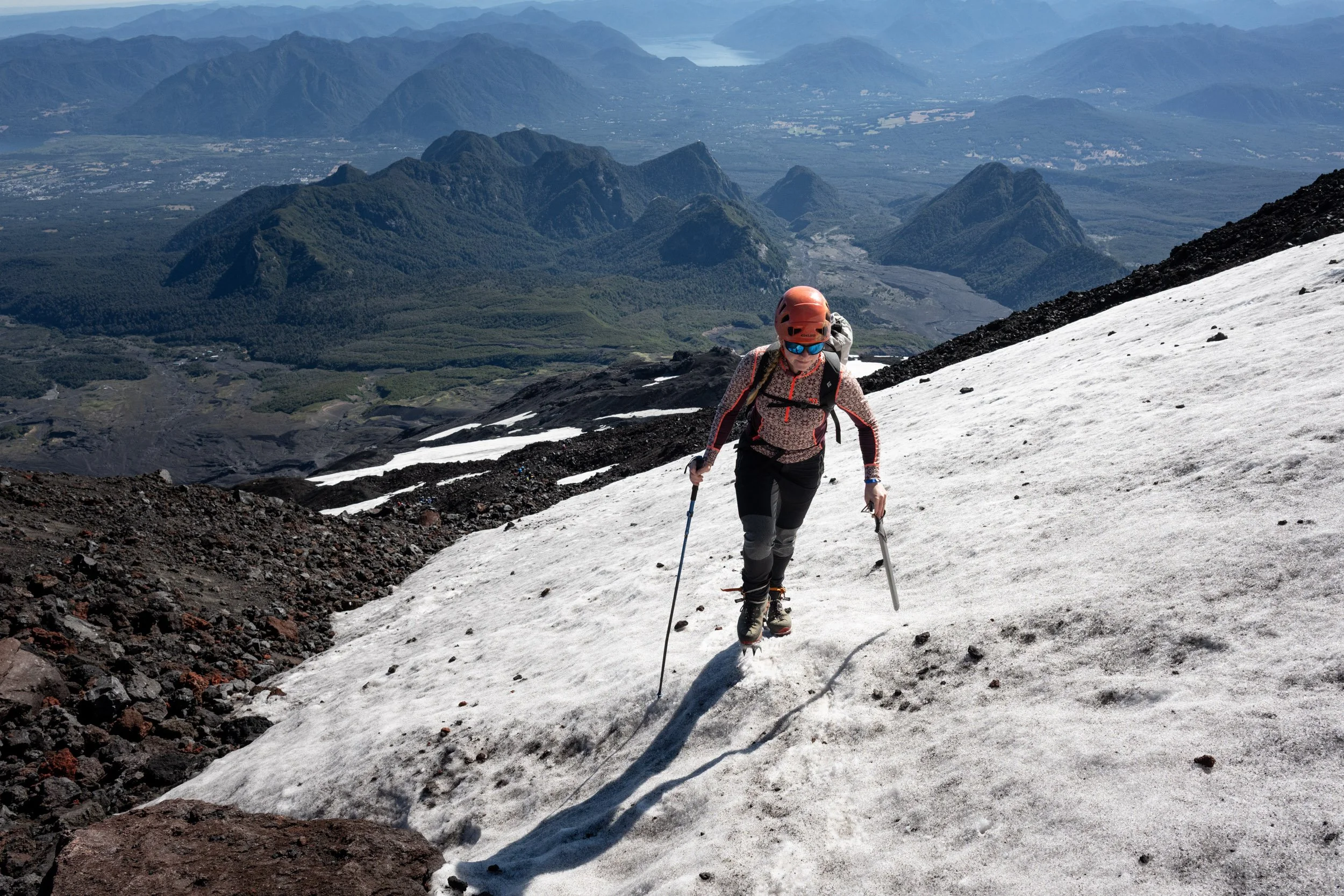
Britt crossing one of the lower snow fields.
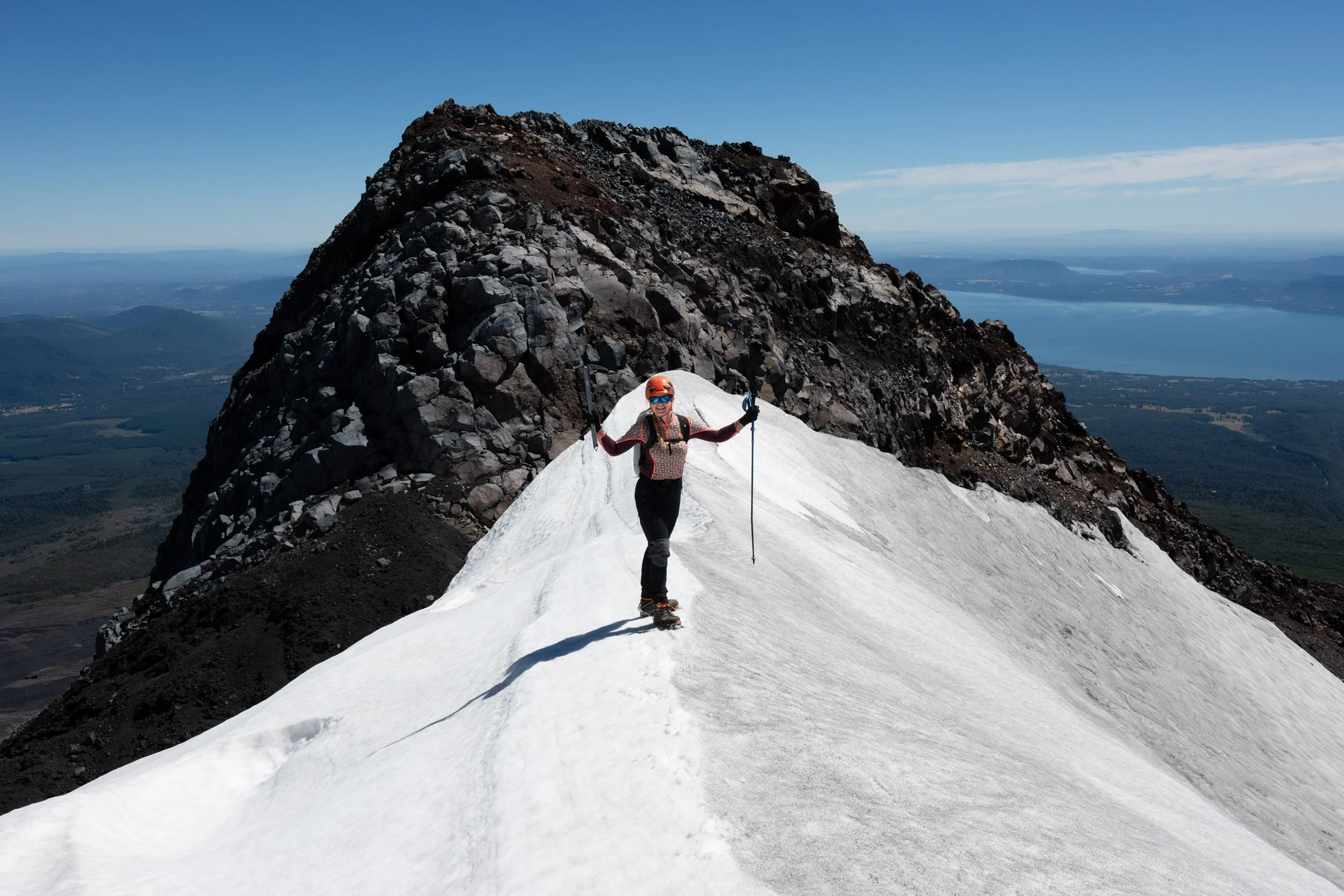
In places where the snow has melted away, you end up fighting your way through loose, ultra-fine volcanic sand. Without a doubt, this is the physically hardest part of this climb. For every two steps up, you slide down one and a half. In the loose sand, old tracks disappear almost instantly, which means that you need to stay sharp in order not to get too much off course. After you’ve crossed the final snowfield, you get to the final section just below the summit ridge. From here, there’s another 100 vertical metres until you reach the side of the crater. The top section is dominated by exposed solidified lava. Razor sharp rock with a deep black colour, speckled with shining crystals. As you approach the crater, the smell of sulphur dioxide intensifies. Even with the wind blowing in the other direction, you smell the sulphur. A clear sign that it’s about time to put your gas mask on. With our gas masks on, we made our way up the last few metres until we were on the edge of the crater. It’s striking how impressive and scary a volcano can be. The inside of the crater is multiple hundreds of metres deep. Getting out of there if you fall in seems like an almost impossible task.
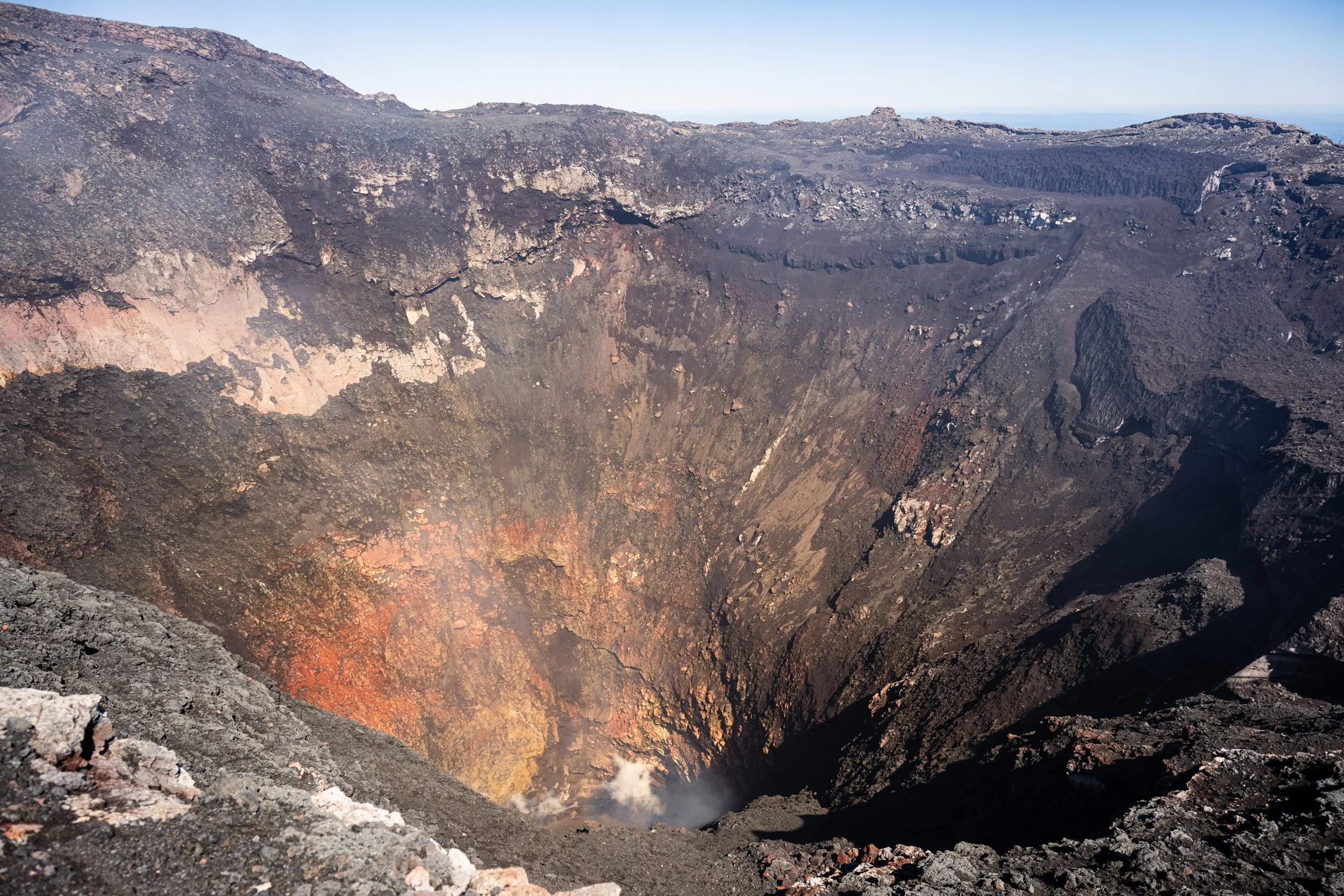
A look into the crater of the Villarica volcano.
From the bottom of the crater, a constant column of steam rises into the air. Along the inner sides of the crater, steam also makes its way to the surface. Like a kettle left boiling on the stove. Villarrica is famous for being one of the few places in the world where you can experience a lava lake in the middle of the crater. Seeing with your own eyes the inside of the Earth bubbling to the surface. The level of volcanic activity fluctuates over time and in calm periods the lava lake is covered with a thick layer of mud, stone and solidified lava making it impossible for the lava to break through to the surface. Unfortunately for us, the level of activity had fallen to such a low level that the lava lake had fallen almost silent. The only sign of activity was the columns of steam.
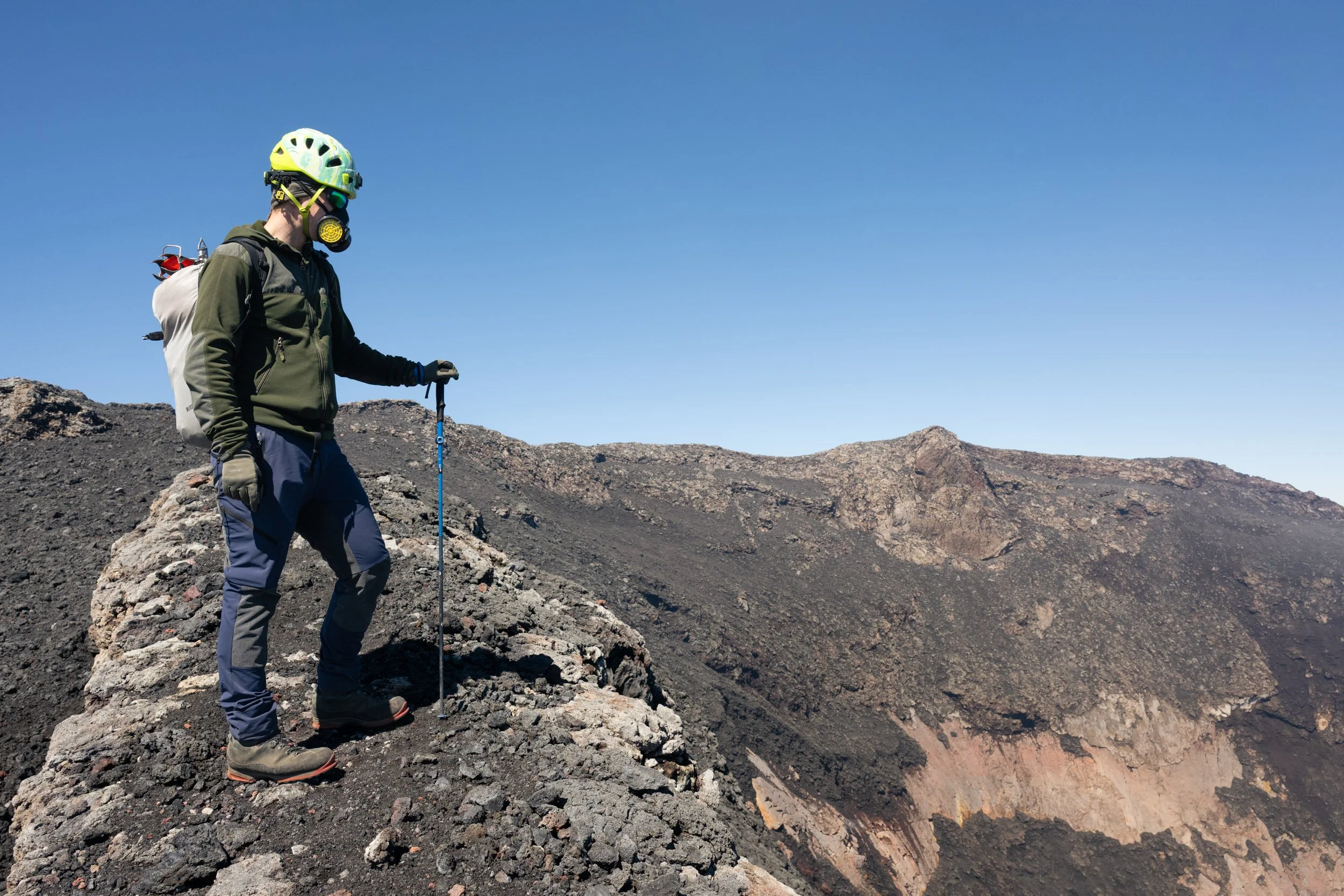
Myself standing at the edge of the crater.
The general advice is not to spend too much time at the rim of the crater. Even with gas masks on, a volcano isn’t a truly health-promoting environment. The official rule states a maximum of ten minutes. Not that anyone checks. For our own health and longevity, we decided to speed things up a bit. We wanted a better vantage point, so we moved a couple hundred metres along the rim of the crater. From there, there was a more direct view into the crater. Standing on the edge looking into the crater, it’s difficult to truly comprehend the size and depth. One thing is for sure, falling in is no joke. The inner walls of the crater are steep and covered in fine, loose volcanic sand. Stopping a fall in those conditions would be almost impossible.
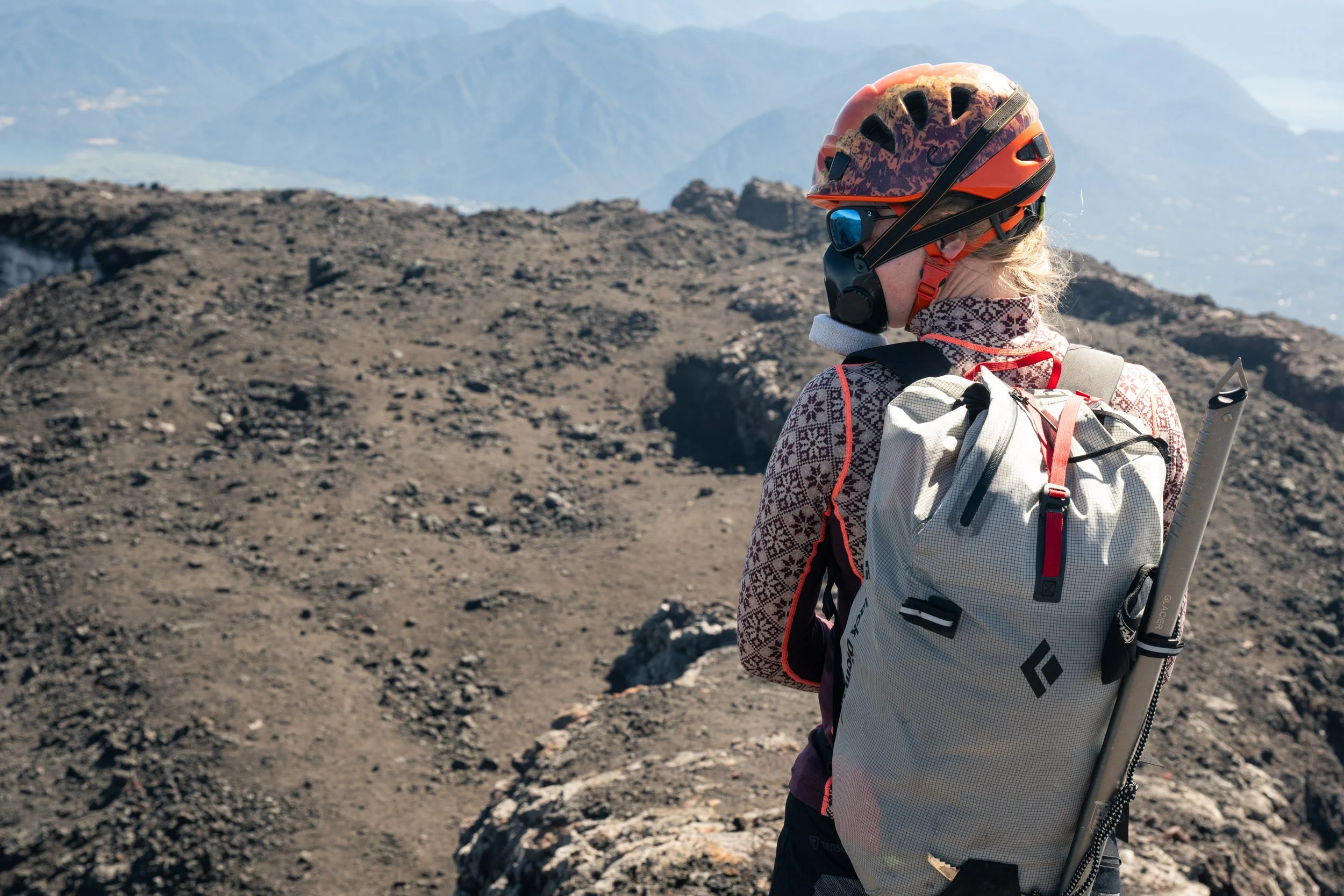
Britt standing at the edge of the crater looking into the Earth.
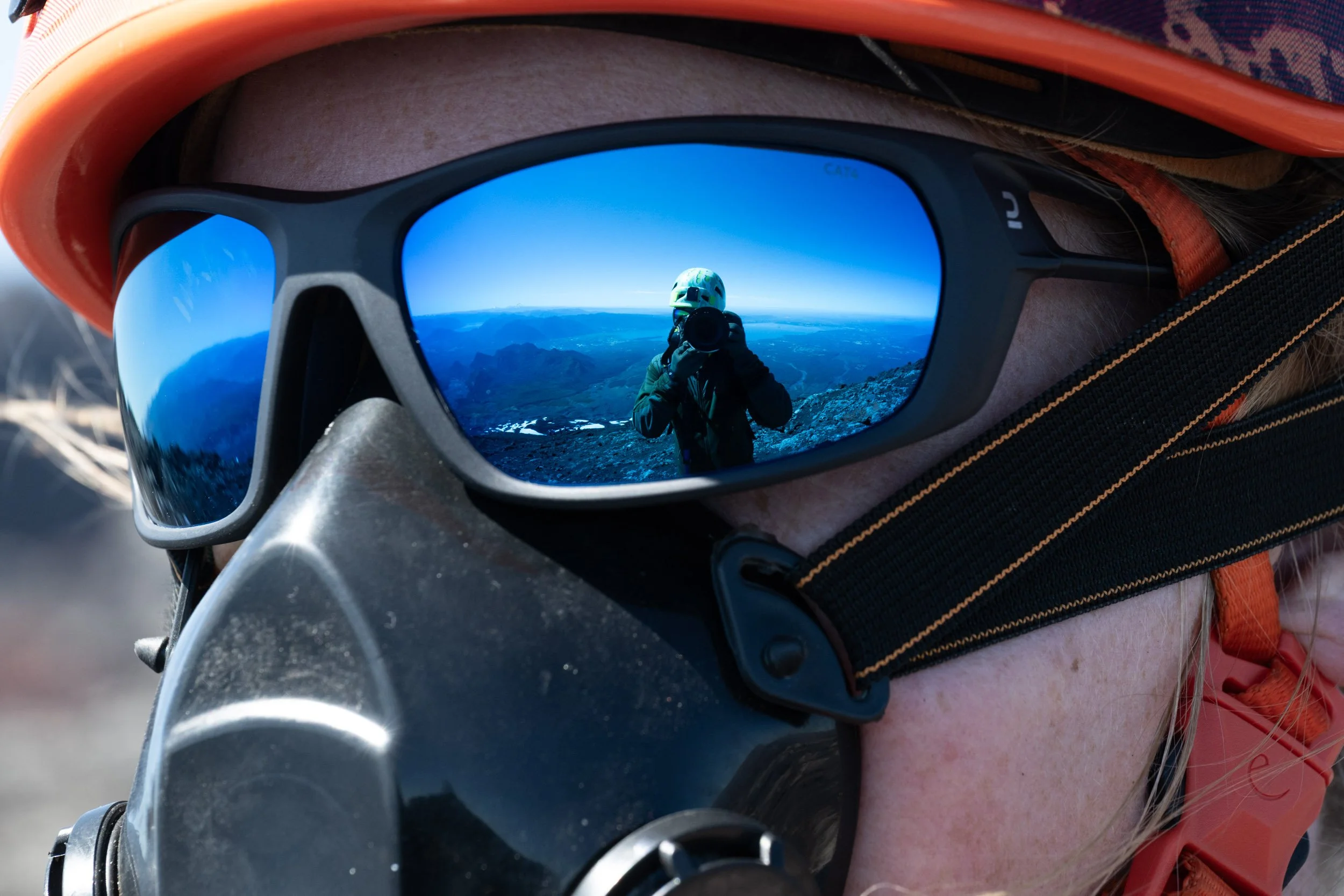
If you turn your back on the crater, you look out over the landscape surrounding the volcano. You see how the landscape has been shaped by volcanic activity over hundreds of thousands of years. In a place like this, the volcanoes rule. You see how the volcanoes have popped up throughout the landscape and how the lava flows have formed the slopes and the valleys. How the eruptions have fertilised the ground, making it possible for lush, dense forest to take root and spread as far as the eye can see. It’s an impressive sight.
Our ten minutes at the top had more than passed. After one last photo of the crater, it was time for us to start our descent. As we began to make our way down, our path crossed with the first guided group making it to the top. The mix of excitement and fatigue in people's eyes just before the summit, always puts a smile on my face. Reaching the summit is always rewarding. We headed back down the same way as we came up. Going down through the snow fields and the loose volcanic sand made for a fast descent. The guided tours make use of simple kids sledges to get down the snow fields. For two reasons, I think. Firstly, it’s safer if you’re not used to wearing crampons. Walking downhill while wearing crampons requires some technique. Jamming a crampon into your leg is not advisable. Secondly, it’s fun. Who doesn’t love the idea of sledding down a mountain. I’m not sure that it’s much faster than walking, but that might be beside the point. Better to be safe and have fun, than fast. We descended alongside a small group who had decided to turn around before reaching the summit. With a bit of good crampon technique, it’s possible to slide, almost ski, down the mountain if the snow conditions are just right, and the loose volcanic sand is a great stand-in for powder snow, allowing for the same high-speed descent. We descended with almost the same speed as the people on sledges.
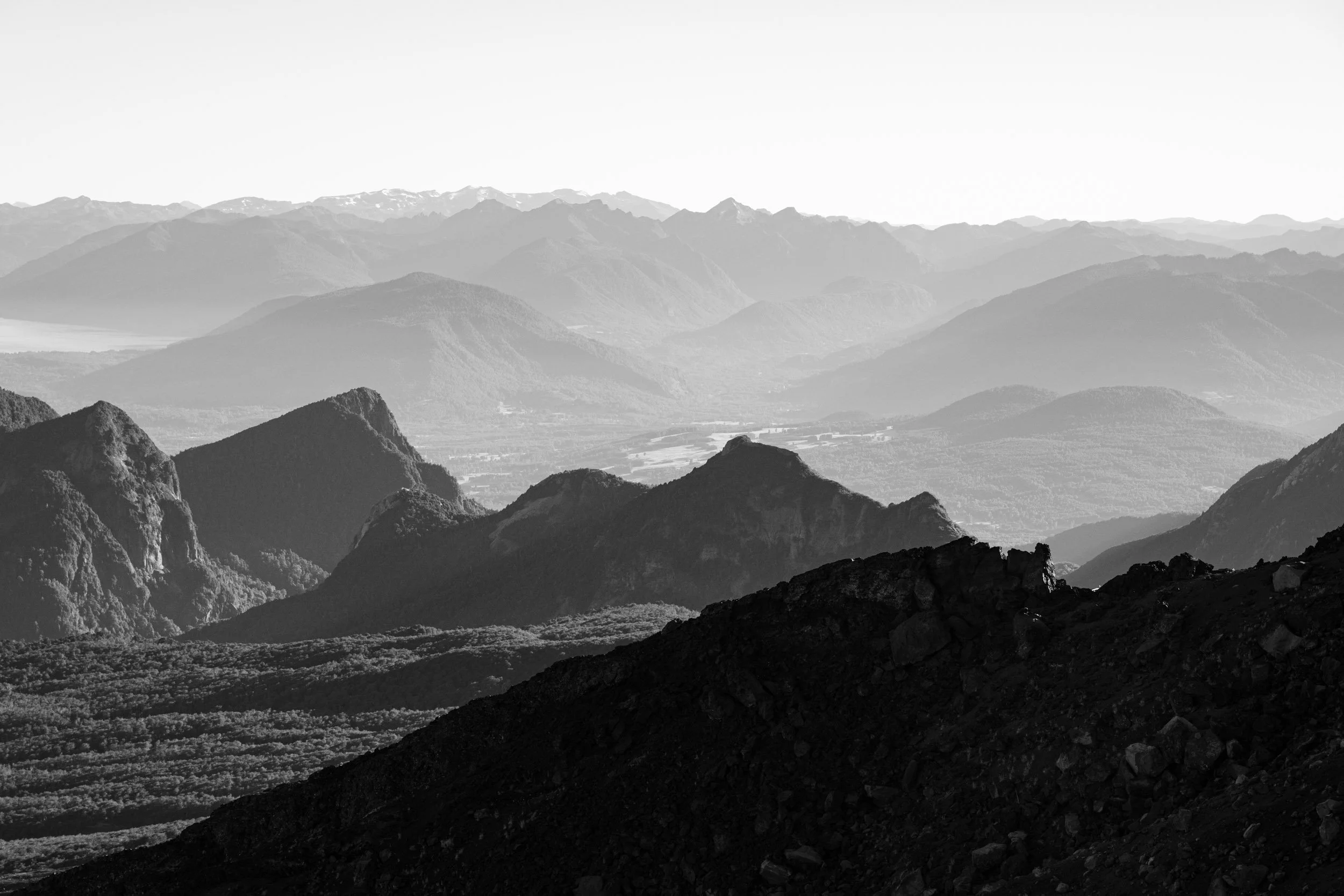
The landscape surrounding the Villarica volcano is full of lush green forest.
Back at the ski lift, we took one last look at the landscape and jumped on. You only truly appreciate a ski lift after a long day on your feet. Saving your knees from enduring yet another couple hundred metres of descent feels like a divine gift. About midway down the mountain, the ski lift suddenly stopped. It’s not unusual that the lift stops midair for a few minutes. Mostly someone needed a bit of extra time to get on or off. Nothing spectacular. Unbeknownst to us, an almost nationwide blackout hit Chile while we were joyfully being lifted down the mountain. Millions of people were without power, including us. Oblivious to the real reason that we were hanging here dangling midair, we looked around and enjoyed the view. It’s the kind of ski lift with two seats next to each other and some 25 metres between the wagons. Two wagons ahead of us, a father was doing his best to scare the life out of his two teenage daughters sitting in the wagon behind. We didn’t understand much of what he was saying, but the message was clear. Maybe we’re going to hang here until we die of hunger. Not sure that the kids were buying it, but you got to make the most of it. After about 20 minutes, we heard an engine start in the distance and a few seconds later we continued our descent. In retrospect, I think this was the backup generator being powered on to make sure that we got down safely. Only after returning to the cabin, we realised that there was no power. Embarrassingly, we only realised the power was out because the Wi-Fi wasn’t working. After talking to our landlord about the missing internet, we realised what was going on. He said with a certain kind of averageness in his voice that it would either take a few minutes or a full day before the power would be back on. Based on his 23 years of experience living in Chile, those were the two most likely scenarios. And since the power had already been out for more than a few minutes, he was leaning towards the full day option. When we woke up early the next morning and flicked the light switch, the power was back on.
After another day of hiking in this area, we took the car to the other side of the Villarrica volcano. On the other side of the mountain, a relaxing and more honeymoon-like experience was waiting for us. Two nights in a half-wood, half-glass dome and a full day at the Termas Geometricas. A series of thermal baths heated with warm water from deep underground. The thermal activity caused by the volcano heats the water and because of the high pressure below, the water makes its way to the surface. The water reaches the surface with a temperature just below 80 degrees Celsius. The warm water is then mixed with cold mountain water to create a more enjoyable temperature; the resulting baths are between 36 and 47 degrees warm. A relaxing way to spend the day. After a full day of immersion, we headed back south. We still had a few days before we had to return our car in Puerto Montt.
Searching for Sea Lions
With the hope of seeing a sea lion, we made a stop around Valdivia. A city of some 150,000 inhabitants. We rented a cabin 15 minutes outside the city, situated on the tree-covered hills. While checking in we got the full tour. The enthusiastic landlord did not only show us around inside the cabin but also outside. Clearly proud of his piece of the forest, he told tales of all the different trees and flowers growing there. Including his proudest possession, the Chilean national flower Lapageria rosea, also known as Chilean bellflower for obvious reasons.
His three dogs roamed freely within the fenced-off property. Two of them didn’t seem to care much about people coming and going, but the third one had a harder time. An old white dog with fading vision and a limited hearing. It was clear that whenever it got surprised or scared, it jumped up and started running around, barking furiously. Clearly a situation which could quickly become dangerous. I don’t think it was an inherently aggressive dog, but without the senses to properly evaluate the world, everything seems scary and dangerous. For us, this meant that leaving the cabin for our car was a case of looking for where the white dog was and making sure that we didn’t scare it. With a bit of extra noise and no sudden movements, we made it work.
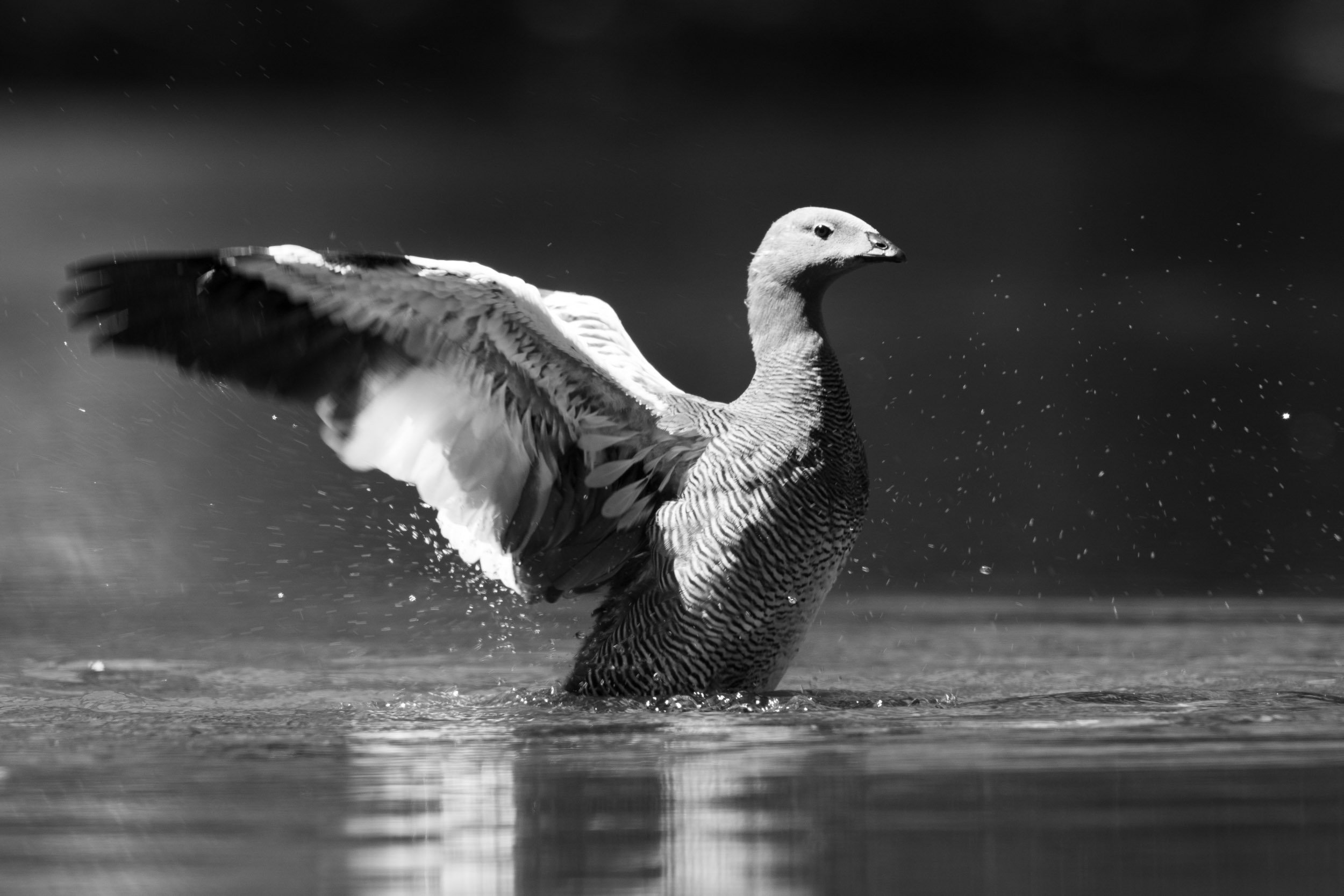
In search of the South American sea lion, we headed south. Crossing over the Valdivian River with a ferry from Niebla to Corral. A humorous sight was waiting for us at the passenger terminal. A large male sea lion had decided to make good use of the terminal’s bus shelter. Well-protected from wind and rain, he was sleeping away, leaving waiting passengers to stand next to the shelter. Looking at him close-up, you realise how big these animals truly are. I’m not sure exactly what I had imagined, but it was at least substantially larger than anything I had had in mind. In retrospect, we should have spent more time enjoying this giant. Our further search was going to be more challenging. In that moment, it felt a bit silly, almost fake, sitting there in our car looking out the window at a sleeping sea lion.
After a short ferry ride, we made it to the other side. From here we drove south along the coast. Our aim was a well-known sea lion hang-out. Just off the coast is a section of rocks sticking out of the water. Here, the sea lions take up summer residence. From what little information that we’d been able to gather, we knew that the access road was on private land and that access could be limited. We decided to try our luck. Unfortunately for us, we were met by a locked gate and a large “No Trespassing” sign. Determined not to give up that easily, we decided to continue our journey south along the coast. It was still early so we hoped that they’d open the gate later in the day. We could then stop by on our return north. As we drove along the coast, the road kept getting narrower and less well-maintained. After about an hour, we’d reached the limit of our rental car’s off-road capabilities. We didn’t dare go any further. Getting stuck here would be a real problem. Not like a life and death situation, but like a how on earth do I explain where we are and that we need someone to come help us get our car out of the sand. So yeah, we turned around. Heading back, we drove past the entrance to the sea lions. The gate was still closed. We decided to drive on. Heading north, we passed by a small bay where a handful of surfers were playing in the waves. We stopped for a minute, looking at them fighting to catch a ride on a wave. Impressive skillset.
Somewhat disappointed that we hadn’t had a good chance to experience the sea lions, we decided to spend our last day in and around Valdivia, with a visit to downtown Valdivia. One of the main tourist attractions in the city is the central fish market. Not famous for the fish themselves but for the sea lions roaming the market hoping to steal a fish from an inattentive shopkeeper. We don’t feel much like cool travellers or daring explorers when we go places like this, but this seemed like our last chance to get a close-up look at these immense animals. We parked our car just outside the city centre on the western side of the river. Walking over the bridge, we got the first sight of the sea lions. Three of them were laying on a platform floating in the water a few meters from the quay. Based on the size, it was one male and two females laying there. The females are not per se small, but the males are truly enormous. A large male can weigh up to 350 kg while a female maxes out at a mere 150 kg. We continued along the harbour until we made it to the fish market. The place had a pungent smell of dead fish. No wonder that this is a favoured hangout for the sea lions.
In recent years, the sea lions have become such a big problem for the shop owners, that the market has been forced to take steps to limit the sea lions’ access to the market. A fence along the water has been erected in an attempt to keep them at bay. To keep the tourist attraction alive, one lucky sea lion is allowed through the gate each day. The lucky sea lion roams the market, stealing a fish here and there. The water on the other side of the fence is teeming with sea lions. Pacing back and forth along the shore. It’s no wonder that the sea lions have made this their favourite hang-out. As the shop owners are cleaning the fish, they throw the leftovers straight into the river. As a sea lion, you should be an imbecile if you wouldn’t take advantage of this free-for-all open buffet. Even if you aren’t the lucky one who gets to play tourist super-star for a day, this is still way less effort than catching live fish at sea. As the market was closing for the day, one of the shop owners chased the sea lion out of the market and back into the water. He banged a long metal rod against the metal structure holding up the roof of the market. The sound was enough to get the massive male to start moving through the market. It was clear that the shop owner was making sure not to get too close or to get too aggressive towards the sea lion. There is no doubt that if the sea lion decided that the shop owner was such a threat, that attacking was a better option than fleeing, the shop owner would lose the fight in a matter of seconds. Galumphing towards the water, the sea lion jumped a one-and-a-half-metre-tall concrete wall before getting to the quay. With incredible strength and surprising elegance, the sea lion almost flew up the wall and landed gracefully on the top. From here, there were only a few metres to the gate which would allow him to jump back into the water. Sprinting along the fence, the shop owner’s son ran to open the gate just in time for the sea lion to jump through and into the water two metres below. In the moment before the sea lion hit the water, the kid had slammed the metal gate shut. With true elegance in the water, the sea lion set off for the day. Job well done.
From Valdivia, we headed back to Puerto Montt for one last night. We had rented a tiny house just outside the airport. Leaving the house in the middle of the night turned out to be quite the adventure. The house is located inside a small, semi-gated community. During the night, the main gate is closed and can only be opened with the use of an app. With poor cell service, we could only trigger the gate using the house’s Wi-Fi, but by the time that we had driven from within the reach of the Wi-Fi to the gate, the gate had closed again. Standing there in the middle of the night, solutions were highly welcome. In the end, I ended up running back to the house. From here I could open the gate, and Britt could drive the car through. I had planned on jumping the gate, but Britt had other ideas. She drove the car halfway through, keeping the sensors activated, which meant that I could peacefully walk through the gate. What a way to start the day. With a slight spike in adrenaline, the time had come to hand in our car and jump on a plane north. Waiting ahead was the last leg of our South America adventure. The Atacama Desert.
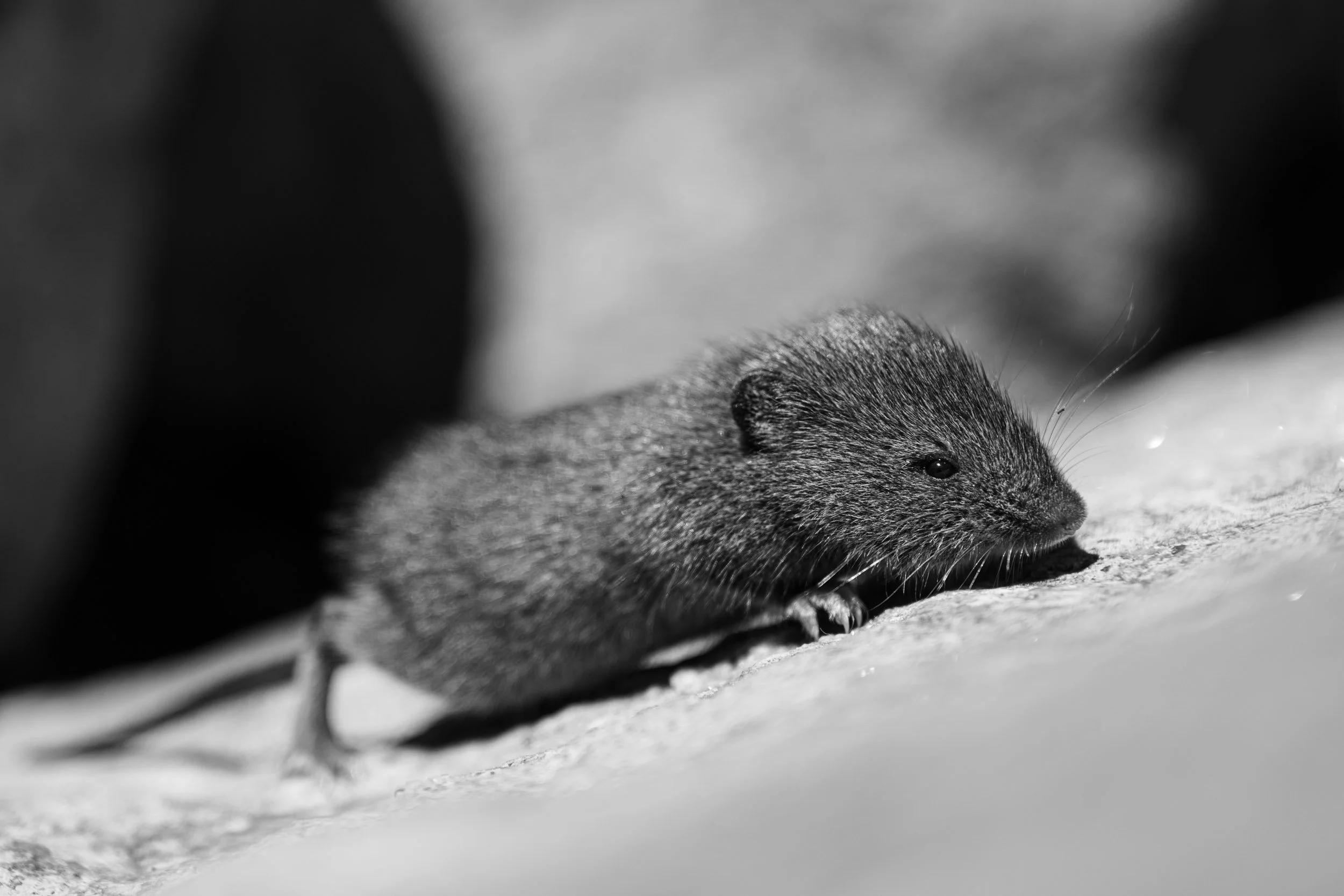
From between the rocks at Santuario El Cañi this mouse peaked out looking for bread crumbs.